
Updated February 2026
Vegan or vegetarian on the Camino de Santiago: how to find food
Future pilgrims ask all the time about the availability of vegetarian or vegan dishes along the Camino de Santiago. They worry that it will be hard for them to find suitable food. And it’s understandable.
Obviously, you need adequate nourishment.
Although the Mediterranean diet includes many vegetables and legumes, Spain is not always the most vegetarian-friendly country. It’s common for a salad to have tuna; and a “vegetable sandwich” with either tuna or a slice of ham is a classic (and nobody thinks it’s odd!).
Things are changing and it’s becoming easier to find vegan or vegetarian restaurants, especially in the bigger cities. But the Camino goes through a lot of smaller towns and rural areas.
So, is it possible to walk the Camino as a vegetariano/a or vegano/a?
The short answer is: YES! It’s possible, with some planning.
Food options for vegetarians and vegans on the Camino
You have two main choices for your meals:
1. Buy and prepare your own food.
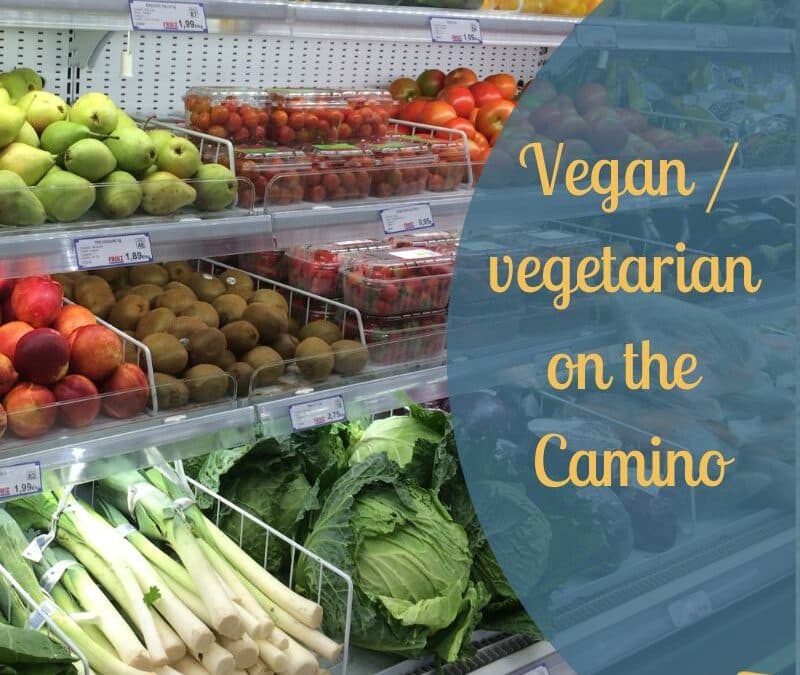
- You can buy food and snacks from the local fruterías and supermercados (see Shopping on the Camino for the pronunciation of these words).
- Some albergues have kitchens where you can prepare your own meal. You just need to find out if the place where you are staying has such facilities.
2. Eat out and enjoy the local cuisine.
This is possible even in the smaller towns.
There are many Spanish dishes that are naturally vegan or vegetarian, like the popular tortilla or gazpacho. Some can be easily adapted (In this article you can find a long list of Spanish dishes that are suitable for vegans: https://www.thenomadicvegan.com/the-ultimate-vegan-guide-to-spain/).
You just need to know a few Spanish words and phrases to make sure you get the right food:
- Soy vegetariano / Soy vegetariana or Soy vegano / Soy vegana (I’m a vegetarian or I’m a vegan)
If you are a male, you will refer to yourself as vegetariano/vegano. If you are a female, you will use vegetariana/vegana instead. If you’re non-binary, the most common way to express this in Spain right now would be vegetariane/vegane.
- You can also specify the foods you don’t eat by saying No como… (I don’t eat…) + anything you need to mention, such as carne (meat), pescado (fish), huevos (eggs), lácteos (dairy) or queso (cheese). Check this other article on food allergies for more useful Spanish and tips.
- If you’re not sure about the ingredients of any particular dish: you can ask ¿Lleva carne, huevo…? (Does it have… meat, egg…?).
- If a dish is mostly vegan, but it has some egg or cheese, for instance, you can still order it and ask them to serve it sin huevo (without egg) or sin queso (without cheese).
- You could even take advantage of the menú del día. The second course tends to include fish or meat, but you can explain that you are vegan or vegetarian and ask if you could take 2 first courses instead of a first and a second. Most places wouldn’t have a problem with that.
- You can still enjoy café con leche as a vegan. Many cafés have some vegetable alternative to dairy milk. Soya is the most common, but oat milk is becoming increasingly popular too.
Practical tips
- Learn the names of basic foods in Spanish, as well as the phrases above.
-
Carry snacks for those times where options are limited.
-
Be clear with restaurant staff about what you can and cannot eat.
-
Don’t be afraid to ask them to adapt dishes. Spanish restaurants are generally flexible.
Today’s Spanish vocabulary
Soy
Vegano
Vegana
Vegetariano
Vegetariana
No como
Sin
¿Lleva...?
Carne
Pescado
Huevos
Lácteos
Queso
☝🏼 Click on the image ☝🏼
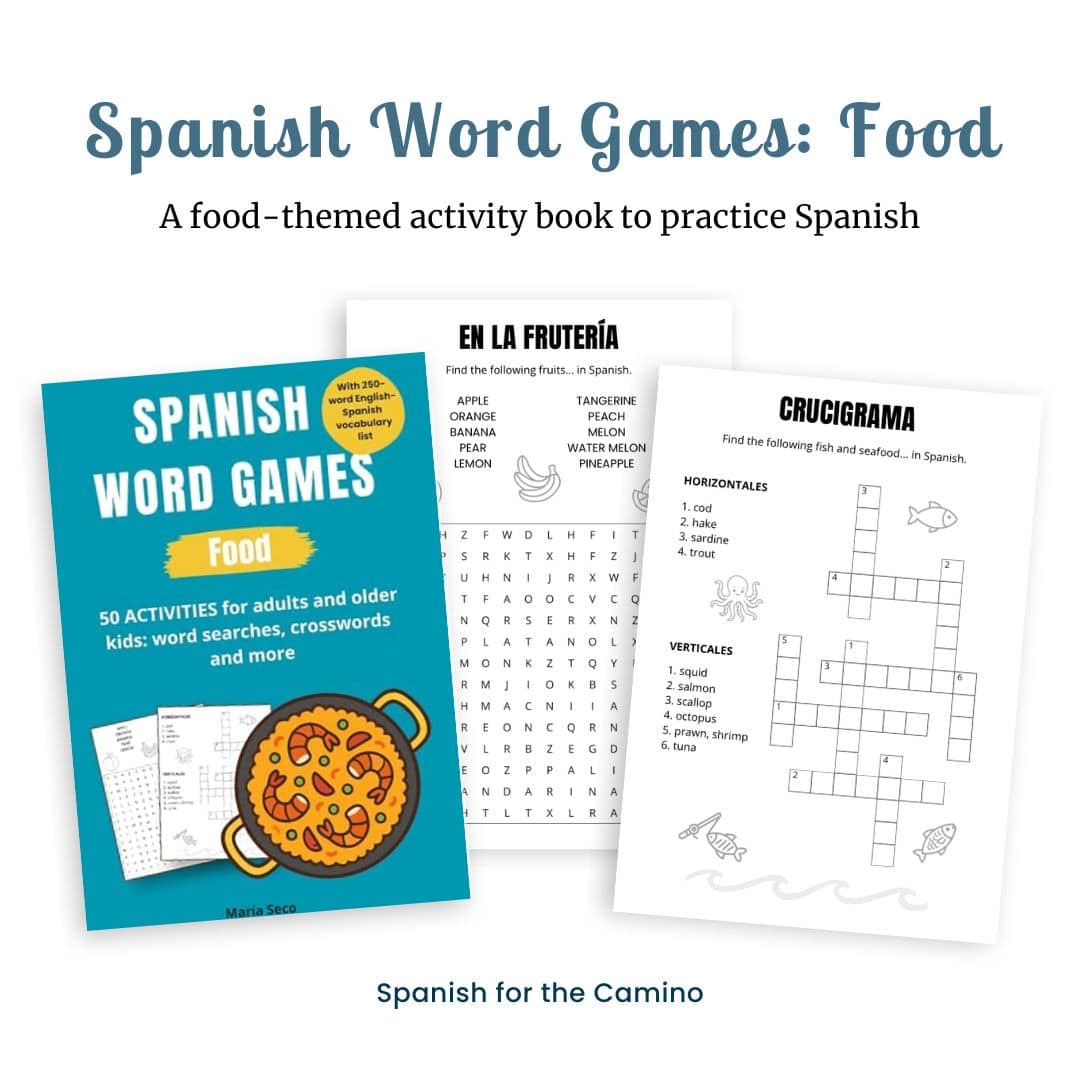
Expand your Spanish food vocabulary while having fun!
Whether you’re just starting to learn Spanish or looking for an enjoyable way to review the basics, this food-themed activity book is the perfect companion.
INCLUDES:
- 50 fun activities, including word searches, crosswords, word scrambles, matching exercises, and more.
- A 250-word Spanish–English vocabulary list to help you learn and review common food-related words.
Want more?
Make sure you don’t miss any posts or announcements by subscribing for free here. You’ll receive a free Camino food guide. And… you’ll get access to exclusive content too.


Fabulous.. thank you so much! I will follow for further ideas and informative posts. Regards, Suzanne
Fantastic! So simple and easy to follow. My Spanish is getting better and this will help a lot.
Thanks! ☺️
Hi María,
Thank you so much for writing this post for vegans who want to walk the Camino! And thanks also for linking to my Ultimate Vegan Guide to Spain 😉
I actually have a guide to eating vegan on the Camino on my website as well. I walked the Camino Francés last summer, and it really was a life-changing experience. I’m hooked now and am planning to walk the Camino Primitivo later this spring. Do you live along that route?
Hi Wendy,
Thanks for your comment! ☺️
I’ve also read your guide to eating vegan on the Camino and I’m planning to share it on my Facebook page this week.
I live along the Camino Portugués and leaning towards the Inglés as my first Camino 👣
Ah, that’s great! I actually live in Lisbon, so I’m sure I will do the Camino Portugués at some point. Maybe next year. You know, you could also just start walking from out your front door for your first camino, like the medieval pilgrims used to do. 🙂
By the way, my husband and I host a podcast for English language learners, and we’ve just released a special audio series all about the camino! Here’s the link if you’d like to pass it along to people who might be interested: https://englishin10minutes.com/theway/